


How Digital Signage Improves Tenant Communication in Offices
ECN Managed Digital Signage delivers a structured, cost neutral tenant communication system across more than 650 premium office buildings in the UK and Europe.
Tenant communication is no longer an administrative afterthought. In multi tenant office environments, communication directly influences tenant satisfaction, operational efficiency and asset perception.
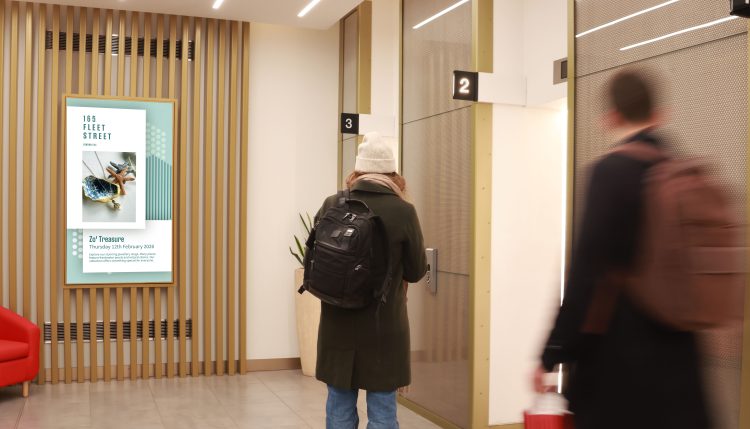
Receptions, lift lobbies and shared amenity spaces are daily communication touchpoints. When messaging is timely, visible and professionally presented, buildings feel organised and well managed. When communication is inconsistent or reactive, friction increases and confidence declines.
Effective tenant communication requires governance, structure and lifecycle accountability.
The Growing Complexity of Office Communication
Commercial buildings now operate in more complex service environments than ever before.
Hybrid working patterns, flexible leases and elevated service expectations mean tenants expect:
– Immediate visibility of operational updates
– Clear messaging during service interruptions
– Professional presentation aligned with premium standards
– Transparency around building initiatives
– Consistency across assets within a portfolio
At the same time, traditional channels are less reliable.
Emails are often missed or deprioritised. Tenant apps depend on voluntary engagement. Printed notices lack immediacy and expire manually.
In shared environments, communication must be visible without requiring deliberate action.
Digital signage fulfils that role only when it is managed.
Industry Validation: Communication Systems Are Becoming Managed Infrastructure
Across Europe, the signage industry is transitioning from project based hardware deployment to recurring managed service ecosystems. Industry analysis highlights:
– Increasing demand for full lifecycle accountability
– 24 hour monitoring expectations
– Defined service level commitments
– Greater procurement scrutiny
– Emphasis on sustainability transparency
– Accelerating market consolidation
Enterprise clients now expect operational maturity rather than technical installation alone.
Digital signage is increasingly treated as managed infrastructure embedded within building operations. For property owners, this confirms a strategic shift. Tenant communication systems must be professionally operated over time.
What Managed Tenant Communication Includes
A managed tenant communication framework includes:
– Defined content categories
– Structured refresh cadence
– Governance and approval workflows
– Template based visual standards
– Automatic expiry rules
– Continuous monitoring
– Defined service expectations
The objective is predictability.
ECN delivers this framework on a cost neutral basis. Property partners do not pay capital expenditure or management fees. Infrastructure and operational support are sustained through curated commercial partnerships, while governance ensures that building communication remains primary and professionally presented.
This removes budget barriers while protecting quality.
Why Unmanaged Communication Systems Lose Credibility
Unmanaged digital signage systems decline in predictable stages. Common weaknesses include:
– Outdated notices remaining visible
– Multiple stakeholders uploading inconsistent slides
– Inconsistent formatting between buildings
– Screens occasionally offline
– Event promotion lacking structure
– No defined owner for refresh discipline
Over time, tenants stop paying attention. Once credibility erodes, signage becomes background hardware rather than communication infrastructure.
Governance prevents this decline.
Governance as a Strategic Asset Control
Governance is the foundation of effective tenant communication. A professional framework includes:
– A single request pathway for building notices
– Defined approval authority
– Word limits to protect legibility
– Structured content hierarchy
– Balanced rotation logic
– Mandatory expiry dates
The expiry rule is fundamental. Every notice must have a defined end date. This protects clarity and prevents clutter.
Templates ensure consistency across buildings and portfolios. Property teams provide key operational information. ECN formats and schedules content within defined standards.
Governance protects tenant trust and reinforces professional standards.
Scale, Consolidation and Portfolio Consistency
The European signage sector is consolidating. Larger operators are strengthening cross border capability and lifecycle maturity.
Institutional landlords increasingly require:
– Portfolio wide reporting
– Standardised governance frameworks
– Sustainability alignment
– Operational resilience
Tenant communication must align with these procurement expectations.
ECN operates across more than 650 premium office buildings. This scale enables:
– Shared governance architecture
– Repeatable content processes
– Centralised monitoring resilience
– Consistent visual standards
– Portfolio level operational continuity
Consistency strengthens asset perception.
Reducing Operational Friction Through Visibility
Clear communication reduces operational friction. When building updates are visible in shared spaces, routine enquiries decrease.
Examples include:
– Lift maintenance schedules
– Amenity opening hours
– Access changes
– Fire alarm testing notices
– Planned service interruptions
– Seasonal building updates
Structured scheduling ensures these notices appear at appropriate intervals and expire automatically. Reception teams benefit from fewer repetitive questions. Tenants benefit from clarity.
Operational efficiency improves.
Emergency and Urgent Messaging Preparedness
Professional tenant communication frameworks include escalation planning.
A managed model defines:
– Urgent message templates
– Escalation procedures
– Message hierarchy rules
– Time limited display controls
Industry trends emphasise operational resilience and 24 hour service readiness. Buildings are expected to respond quickly and clearly during disruptions.
Preparedness ensures urgent communication does not disrupt overall content structure.
Sustainability and Responsible Communication
Sustainability expectations continue to increase across commercial real estate portfolios. Industry reporting identifies green signage and lifecycle transparency as emerging priorities.
Managed tenant communication supports sustainability by:
– Reducing reliance on printed notices
– Enabling structured ESG storytelling
– Promoting sustainable transport and building initiatives
– Centralising remote management to reduce site visits
– Supporting lifecycle oversight of hardware
Because governance is centralised, sustainability messaging can be integrated into planned content cycles rather than appearing inconsistently.
Communication becomes aligned with broader ESG strategy.
Protecting Asset Reputation Through Communication Discipline
In premium office buildings, perception compounds.
Tenants and visitors evaluate professionalism based on visible operational cues. Digital signage is highly visible infrastructure. When screens display clear, timely and professionally formatted messaging, they reinforce management competence. When screens display outdated or inconsistent information, they undermine it.
Communication discipline protects asset reputation through:
– Defined governance
– Monitoring resilience
– Structured review cycles
– Clear ownership
Consistency underpins trust.
The Content Calendar Advantage
One of the primary barriers to effective tenant communication is time. Property managers manage contractors, compliance, tenants and operational logistics. They are not content production teams.
Without structure, screens stagnate.
ECN provides a managed content calendar that includes:
– Live utility information
– Scheduled notice slots
– Rotating amenity highlights
– Seasonal communication prompts
– Planned refresh cycles
Property teams provide essential information. ECN formats, schedules and governs the content.
This reduces workload while maintaining premium presentation standards.
Long Term Communication Strategy and Future Readiness
Buildings are evolving into service environments. Tenant expectations are rising. ESG reporting and operational transparency are increasingly important.
Communication systems must:
– Remain adaptable
– Support sustainability objectives
– Align with procurement standards
– Operate within structured governance
Managed communication models are future ready because they operate within defined frameworks rather than ad hoc uploads. A cost neutral structure further supports flexibility. Without capital outlay or management fees, buildings can evolve communication strategy without financial constraint.
Tenant communication becomes part of long term service architecture.
The Financial Model and Commercial Impact
Traditional signage deployments often require:
– Capital investment
– Ongoing licence fees
– Internal CMS administration
– Design resource allocation
ECN’s cost neutral model removes these barriers.
Property partners benefit from:
– No capital outlay
– No management fees
– No CMS administration burden
– No internal design overhead
This enables communication enhancement without budget approval cycles.
Effective tenant communication influences:
– Tenant satisfaction
– Perception of management competence
– Amenity participation
– Event attendance
– Retention
– Asset reputation
Structured visibility strengthens buildings.
Procurement Considerations
When evaluating a managed tenant communication partner, property teams should consider:
– Is governance clearly defined?
– Are refresh cycles enforced?
– How is uptime monitored?
– Are service levels measurable?
– How does the system scale across portfolios?
– Is the model cost neutral?
– How is sustainability addressed?
Rising procurement maturity demands structured answers.
Frequently Asked Questions
What is the difference between installing screens and managed tenant communication?
Installation provides hardware. Managed communication provides governance, monitoring discipline and lifecycle accountability.
Is there a cost to the building?
ECN Managed Digital Signage is delivered on a cost neutral basis. Property partners do not pay capital or management fees.
How many buildings operate this model?
More than 650 premium office buildings across the UK and Europe.
What is the most important rule for effective tenant communication?
Apply an expiry date to every notice to prevent clutter and protect credibility.
Does managed signage increase workload?
No. Structured workflows and content calendar support reduce administrative burden.
Final Summary
Tenant communication in premium office buildings must be structured, visible and professionally governed.
As the European signage industry consolidates and procurement standards rise, communication systems are increasingly expected to operate as managed services. Lifecycle accountability, monitoring resilience and sustainability alignment are no longer optional.
ECN Managed Digital Signage delivers this structured tenant communication framework across more than 650 premium office buildings in the UK and Europe. Through a cost neutral model, property partners receive professionally operated communication infrastructure without capital or operational cost.
Clear communication strengthens buildings. Managed service ensures it remains consistent, credible and sustainable.